Cat Dental Cleaning Cost: US Averages, What's in the Bill and Why It Can Double
A cat teeth cleaning averages about $375 in the US, but extractions, X-rays and bloodwork can push the same visit to $600-$2,000. See state prices, line items and ways to save.
On this page
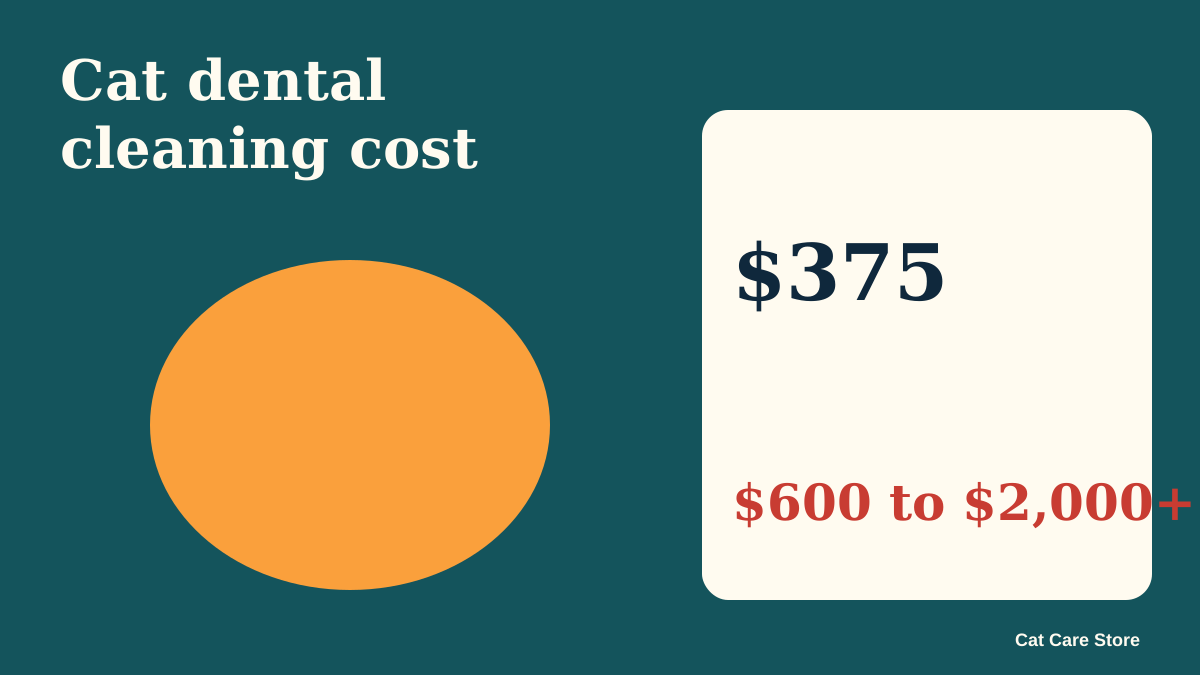
The short answer: a routine cat dental cleaning in the US averages about $375, with a typical range of $300 to $682, according to a 2025 cost study published by CareCredit. That figure is for the cleaning itself. If your vet finds diseased teeth, the bill for the same visit can climb to $600 to $2,000 or more, because extractions, X-rays and pain control are added on top. This guide is general information, not veterinary advice, and your own clinic's written estimate always beats an average.
What a cat dental cleaning costs in the US
The CareCredit figures come from a 2025 survey of clinics in all 50 states and Washington, DC, run by an independent market-research firm. It puts the national average for a cat teeth cleaning at $375, within a range of $300 to $682. Location matters more than most owners expect. Here is a selection of the state averages for cats from the same study:
| State | Average cat teeth cleaning |
|---|---|
| Mississippi | $317 |
| Alabama | $331 |
| Texas | $350 |
| Illinois | $357 |
| Florida | $389 |
| New York | $464 |
| California | $527 |
| Massachusetts | $549 |
| Hawaii | $710 |
The study notes that actual prices vary by provider, and that an office-visit fee may be charged in addition. CareCredit also lists the type of clinic, your cat's size and weight, and whether extractions or other procedures are needed as price drivers.
Why the final bill is often higher than the quote
A cleaning quote assumes a cat with mild tartar. In practice, the vet only sees the real state of the mouth once your cat is under anesthesia and X-rays are taken. AVMA explains that most dental disease sits below the gumline, where you cannot see it, which is why a proper evaluation uses X-rays and happens under anesthesia.
The conditions that turn a cleaning into surgery are common in cats:
- Tooth resorption. The Merck Veterinary Manual calls resorptive lesions the most frequently seen dental abnormality in cats. The tooth breaks down from the inside, often with red, inflamed gums, and the damage to the root shows up on X-rays. In most cases the affected teeth need to be extracted, and most lesions cannot be prevented because the cause is usually unknown.
- Periodontitis. This is irreversible loss of the tissue and bone that hold the tooth. Merck says extractions are often necessary, and that cats do surprisingly well without the teeth.
- Severe mouth inflammation (gingivitis-stomatitis). Merck describes extraction of most or all teeth as the only effective treatment for this syndrome, and notes that most cats can still eat moist food afterwards.
MetLife Pet Insurance puts a cat tooth extraction visit at $600 to $1,200 per tooth, and up to $2,000 or more for several teeth, with severe cases, specialist care or an emergency visit approaching $3,000. That number is a whole-visit estimate, not the surgeon's fee alone: the same page says the extraction itself is around $40 to $100 per tooth, and the rest is exam, X-rays, pre-surgery bloodwork, anesthesia, the cleaning and after-care. Treat the range as a ceiling for planning, not a typical price.
What is in a dental bill
When two clinics quote very different prices, the gap is usually in what is included. Ask for a line-by-line estimate that covers:
- Exam before the procedure.
- Pre-anesthetic bloodwork, which MetLife lists as part of the cost of a dental or extraction visit.
- Anesthesia and monitoring, including an IV catheter and fluids.
- Scaling and polishing above and below the gumline.
- Dental X-rays. Check that full-mouth X-rays are included, not an optional extra. Without them the vet cannot see root disease.
- Extractions, usually charged per tooth, with surgical extractions costing more than simple ones.
- Pain relief and take-home medication, including local nerve blocks where used.
The most useful single question to ask is: "What is the price if you find teeth that need to come out?" A good clinic will give you a likely range and a point at which they would phone you for approval before going further.
Is an "anesthesia-free" cleaning a cheaper option?
You will see lower prices advertised for cleanings done while the cat is awake. AVMA's guidance is blunt: the American Veterinary Dental College does not recommend dental cleanings without anesthesia, because they do not allow cleaning or inspection below the gumline, where most dental disease occurs, and they can injure the cat or the person doing the work. A cleaner-looking tooth surface is not the same as a healthy mouth, so this is false economy for a cat with underlying disease.
What UK owners can expect
UK practices commonly quote a scale and polish separately from extractions, so the headline price can understate the final bill in the same way. One published example: Animal Trust Vets lists a fixed dental procedure price of £430 that includes scale and polish, X-rays, as many extractions as required, general anaesthesia and take-home pain relief. Other practices price the same work very differently, so compare what each quote includes rather than the first number. Ask any practice whether it offers a fixed-price dental package.
How to keep the bill down without cutting corners
- Get two written estimates for the same scope: pre-anesthetic bloodwork, full-mouth X-rays, cleaning and extractions as needed. Compare totals, not headline prices.
- Do not wait for a crisis. Merck notes that plaque left on the teeth for more than 72 hours begins to harden into tartar, and that gum disease rarely develops around clean teeth. A cleaning for mild disease is cheaper than a multi-tooth extraction visit.
- Brush at home. Both AVMA and Merck name daily or frequent brushing as the most effective home measure. AVMA adds that it may reduce, or even eliminate, the need for cleanings, and that patience and training matter with cats. Ask your vet about dental products and diets rather than buying on marketing claims; AAHA's dental guidelines cover the science behind products approved by the Veterinary Oral Health Council (VOHC), a useful filter when you compare dental treats and gels.
- Ask about payment options before the procedure. Many clinics offer payment plans or accept veterinary financing cards. Read the interest terms first.
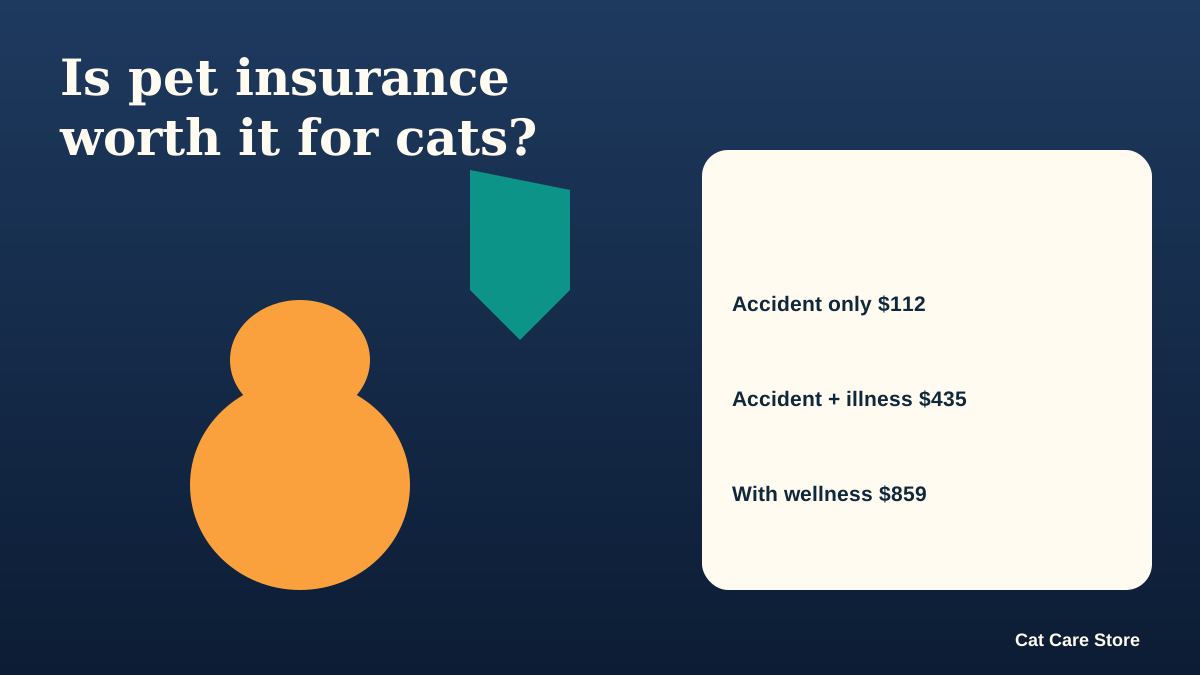
- Check your insurance wording. Routine cleanings are usually only covered by a wellness add-on, as we explain in our guide on whether pet insurance is worth it for cats. Some accident-and-illness policies cover dental disease and extractions, but pre-existing conditions are excluded, so a policy bought after a dental diagnosis will not pay for it. Read the dental clause and the waiting period before you buy.
How often does a cat need one?
AVMA recommends that your vet checks your pet's teeth and gums at least once a year and says that by age three most dogs and cats will very likely have some early evidence of periodontal disease. Whether your cat needs a full cleaning depends on that exam. After treatment for periodontitis, Merck suggests frequent preventive cleanings, every 3 months to 1 year, plus home care. Do not schedule from a calendar alone: let the oral exam decide.
Signs your cat needs a dental check sooner
AVMA lists these as reasons to have the teeth checked sooner than the yearly visit: bad breath, broken or loose teeth, teeth that are discolored or covered in tartar, abnormal chewing, drooling or dropping food from the mouth, reduced appetite or refusal to eat, pain in or around the mouth, bleeding from the mouth, and swelling around the mouth. Cats hide pain well, so a cat that is merely eating more slowly or on one side deserves a look. Our guides to subtle signs of pain in cats and what to do when a cat stops eating explain what else can look like a dental problem. Be careful when you check a painful mouth: a hurting cat may bite. If you are weighing up a new vet for dental work, our checklist for choosing a vet includes questions about in-house dental X-rays and anesthesia monitoring. For older cats, our senior cat guide lists which age-related changes are not normal.
Frequently asked questions
How much is a cat teeth cleaning without extractions?
In the US, the 2025 CareCredit study puts the average at $375, with most prices between $300 and $682, depending on where you live and how the clinic bundles X-rays and bloodwork. Ask whether those items are included.
Why did my vet quote $800 or more?
A quote at that level normally includes bloodwork, anesthesia, X-rays and often one or more extractions, which is in line with the whole-visit ranges insurers publish. Ask for the line items and the price for each extra tooth.
Can I skip the anesthesia to save money?
The American Veterinary Dental College does not recommend cleaning without anesthesia, because the vet cannot clean or inspect below the gumline. It may leave dental disease untreated while looking tidy.
Can my cat eat normally after extractions?
According to Merck, cats do surprisingly well without the affected teeth, and most can eat moist food, and eventually solid food, even after many teeth have been removed. Follow your vet's after-care plan.
Does pet insurance pay for dental cleanings?
Usually only through a wellness add-on. Some accident-and-illness plans cover dental disease or injury treatment, subject to exclusions and pre-existing condition rules, so read the policy before you rely on it.
Sources
- CareCredit (Synchrony), How Much Does Cat or Dog Teeth Cleaning Cost? (April 24, 2026; 2025 Synchrony Average Procedural Cost Study)
- MetLife Pet Insurance, Cat Tooth Extraction Cost & What To Expect (September 9, 2026)
- American Veterinary Medical Association, Pet dental care
- Merck Veterinary Manual (cat owners), Dental Disorders of Cats
- American Animal Hospital Association, 2019 AAHA Dental Care Guidelines for Dogs and Cats
- Animal Trust Vets, Dental care (fixed-price dental procedure, UK)