Is Pet Insurance Worth It for Cats? What It Costs, What It Excludes and a Simple Test
US cat insurance averages $435 a year for accident-and-illness cover. What policies cost in the US, Canada and UK, what they exclude, and when they pay off.
On this page
The short answer: for most cat owners, pet insurance is worth it as protection against a bill you could not comfortably pay, not as a way to save money on routine care. The average US accident-and-illness policy for a cat cost $435 a year in 2025, about $36 a month, according to the North American Pet Health Insurance Association (NAPHIA). Over ten years that is roughly $4,350 at today's prices (premiums usually rise with age). One serious illness or emergency can cost more than that in a single week. If you have a dedicated emergency fund of a few thousand dollars, you may not need a policy. If one surprise bill would force a hard choice, a policy is worth pricing up.
This guide is general information, not financial or veterinary advice. It covers what cat insurance costs in the US, Canada and UK, what policies exclude, and a simple way to decide.
What cat insurance costs in 2026
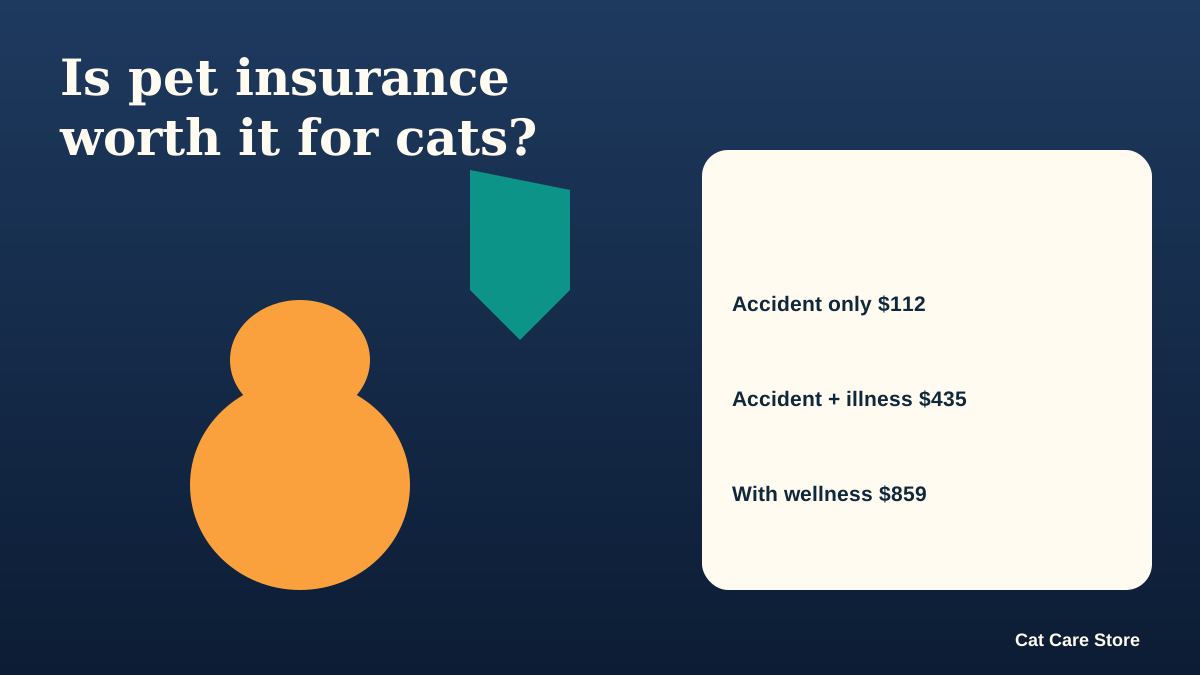
NAPHIA's 2026 State of the Industry Report covers 2025 and is the best public benchmark of what owners actually pay. Cats are cheaper to insure than dogs, and the three main plan types differ a lot:
| Plan type (US, per cat per year, 2025) | Average premium | Per month |
|---|---|---|
| Accident only | $112 | about $9 |
| Accident and illness | $435 | about $36 |
| Insurance with embedded wellness | $859 | about $72 |
Two changes stand out. The average accident-and-illness premium for cats rose 12.6% in a year, from $386 to $435. The average wellness-inclusive plan jumped 31.9%, from $651 to $859. Your own quote depends on your cat's age, breed, ZIP code, deductible and reimbursement level, so treat these as averages and not as a price list.
In Canada, NAPHIA reports an average of C$601 a year for cat accident-and-illness cover and C$212 for accident-only. In the UK, the Association of British Insurers (ABI) reports that its members paid out a record £1.23 billion in pet claims in 2024, including £232 million for cats. The average claim across all pets was £685. UK vets and pet services also saw 9.1% price inflation in 2024, according to the Office for National Statistics figure quoted by the ABI.
How many cat owners actually insure
Very few. NAPHIA puts the US penetration rate for cats at 2.29% (around 76 million cats are owned in the US) and the Canadian rate at 1.91%. Dogs are insured at more than double the rate. Whatever the reason, most cat owners are paying vet bills out of pocket, which is why it is worth deciding in advance how you would cover a large one.
What a big claim looks like
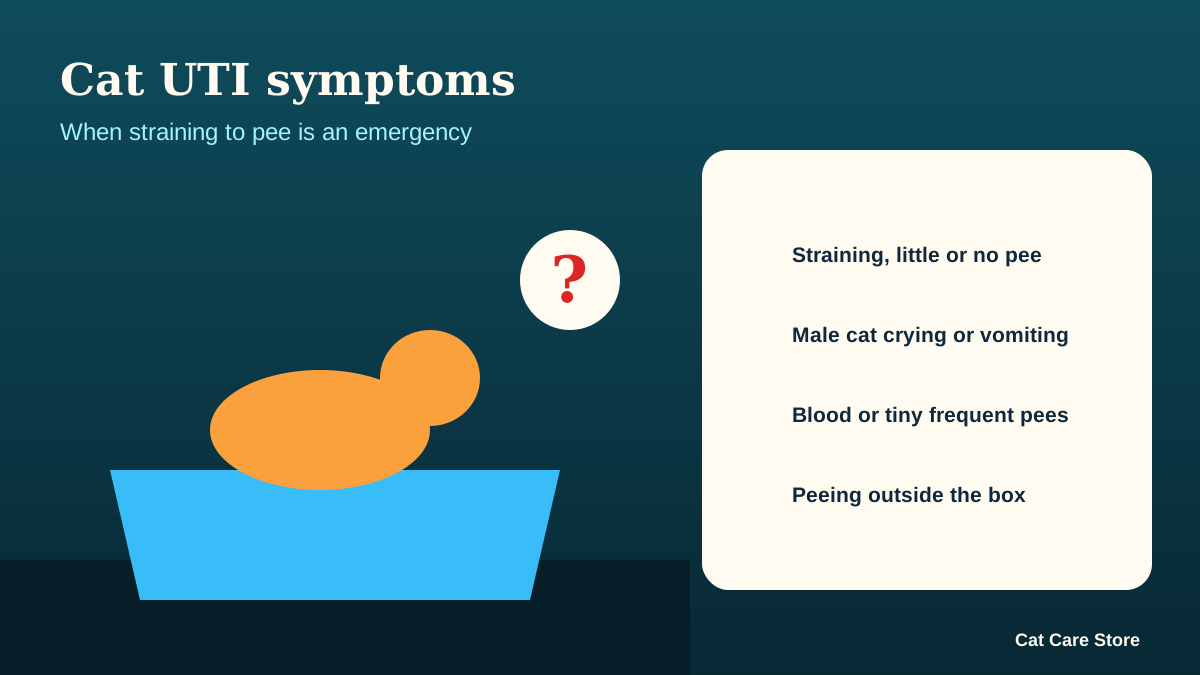
Averages hide the tail. NAPHIA also lists the ten largest cat claims its members paid in 2025. They are cancer ($51,600), a corneal ulcer ($50,000), liver disease ($45,900), trauma ($37,400), a urinary system problem ($36,600), kidney disease ($35,900), pyelonephritis (kidney infection, $31,900), another liver condition ($26,400), pneumonia ($25,400) and azotemia (raised kidney waste products, $24,500). These are the most extreme cases, not typical bills, and the sample is limited to NAPHIA members' own data. But they show that common feline problems such as urinary disease and kidney disease can become five-figure events. Our guide to cat UTI symptoms and blockages covers one of the most common.
What cat insurance usually does not cover
The American Veterinary Medical Association (AVMA) tells owners to check the limitations and exclusions before buying. These are the ones that catch people out:
- Pre-existing conditions. Anything your cat has shown signs of before cover starts, or during the waiting period, is normally excluded. Some insurers treat "curable" conditions such as a urinary infection or a respiratory infection as eligible again after a symptom-free period (one US insurer, ASPCA Pet Insurance, uses 180 days). Chronic conditions such as diabetes, hyperthyroidism or kidney disease are not.
- Waiting periods. A new policy rarely pays for an illness that starts in the first days or weeks.
- Routine and preventive care. Vaccines, check-ups and dental cleaning are usually only covered by a wellness add-on or an embedded-wellness plan, which is why those plans cost about twice as much.
- Deductibles and co-pays. AVMA says all charges, including deductibles, co-pays and add-on fees, should be clearly explained to you before you sign.
- Annual and per-condition limits. Policies cap what they pay, either per year or per condition, so a cheap premium can come with a low ceiling. Check the limit against the five-figure claims above.
- Price rises. AVMA advises asking how your premium will increase as your pet ages or if you make claims.
Most US plans are reimbursement plans. You pay the vet first and claim the money back, so check how long claims take and whether you could cover a large bill upfront. AVMA suggests asking your vet about payment options before an emergency, not during one.
UK cover types: lifetime, time-limited and maximum benefit
If you are in the UK, MoneyHelper (the UK's government-backed money guidance service) describes four main cover types: lifetime, annual or time-limited, accident-only and maximum benefit. The difference matters more than the headline price:
- Lifetime is the most comprehensive type. MoneyHelper says long-term and pre-existing conditions are normally only covered under a lifetime policy, and that you might lose that cover if you change insurer.
- Maximum benefit gives a fixed sum for each illness or injury for as long as the policy is in force. Once that sum is spent, you pay the rest.
- Time-limited cover, as comparison site GoCompare describes it, covers a new illness or injury for up to 12 months, so a long-term illness can outlast the cover.
MoneyHelper also suggests checking the maximum cover for vets' fees, with examples such as £6,000 a year for life or £5,000 per condition.
Is it worth it for your cat? A simple test
Work through these four questions rather than relying on a general verdict:
- Could you pay a $5,000 (or £4,000) vet bill this month without debt? If yes, a dedicated savings pot may beat insurance, especially for a healthy young indoor cat. If no, insurance moves the risk to an insurer.
- How old is your cat? Premiums are lowest, and exclusions fewest, when the cat is young and healthy. Waiting until the first diagnosis means that condition will be excluded. See our senior cat guide for the conditions that tend to appear later.
- Is the cat a pedigree? Some breeds are more prone to inherited conditions, and some insurers limit cover or raise prices for them. AVMA notes that insurers may decline specific breeds or limit the number of pets you can insure.
- What will the policy not pay for? Ask for the policy wording, not the marketing page, and look at pre-existing conditions, waiting periods, annual limits, per-condition limits and the reimbursement percentage.
A rough break-even check: take the quoted monthly premium, multiply by twelve, and compare it with the amount you would realistically put into a savings pot for the same period. Then ask what happens in the worst year. A policy only wins when the worst year arrives early, before you have built the pot. A savings pot wins when nothing serious happens. Neither answer is wrong; the question is which risk you can carry.
Ways to lower the cost
- Insure early. A young, healthy cat has no pre-existing conditions to exclude, and our kitten care guide explains the first vet visits that give you a clean record.
- Choose a higher deductible if you have savings for the first part of any bill.
- Buy accident-and-illness cover and pay for routine care yourself, unless a wellness plan clearly costs less than the services you will use.
- Compare at least three quotes using the same age, breed, ZIP code or postcode, deductible and reimbursement level, so you are comparing like with like.
- Pick a vet you trust before you need one; our checklist for choosing a vet includes asking about payment options.
When not to buy
Skip a policy, or delay, if your cat already has a serious chronic condition that would be excluded, if the premium would strain your monthly budget, or if you have enough savings set aside. An insurer that cannot pay for what you are most worried about is not providing the protection you want. Even then, accident-only cover at about $9 a month can be a cheap cushion against injuries and poisoning.
Frequently asked questions
Is cat insurance worth it for an indoor cat?
Indoor cats still get illnesses, and NAPHIA's largest cat claims are mostly illnesses such as cancer, liver disease and kidney disease, not road accidents. Whether it is worth it depends on how you would cover a large bill, not on whether your cat goes outside. Our guide to subtle signs of illness helps you catch problems early.
Does pet insurance cover my cat's existing condition?
Normally not. Conditions your cat has shown signs of before cover starts, or during the waiting period, are excluded. Some insurers will cover a curable condition again after a symptom-free period, and in the UK, lifetime policies usually keep covering conditions that began while you were insured. Always check the policy wording.
Does it cover vaccines and check-ups?
Usually only with a wellness add-on or an embedded-wellness plan, which NAPHIA says costs an average of $859 a year for cats in the US.
Can an insurer raise my price after I claim?
Premiums can rise with age and, with some insurers, after claims. AVMA recommends asking in advance how your premium will change as your pet gets older or if you make claims.
Which insurer is best?
We do not rank insurers. AVMA also does not endorse any provider. Compare policy wording on the exclusions and limits above, and ask your vet which claims processes they find easiest.
Sources
- North American Pet Health Insurance Association (NAPHIA), 2026 State of the Industry Report Highlights (June 2026, 2025 data)
- American Veterinary Medical Association (AVMA), Do you need pet insurance?
- Association of British Insurers (ABI), Insurance payouts for 'pawly' pets top £1 billion for third year in a row (May 31, 2025)
- MoneyHelper, Pet insurance – do you need it?
- GoCompare, Lifetime pet insurance (cover types)
- ASPCA Pet Health Insurance, Pet insurance and pre-existing conditions