Cat Spay and Neuter Cost: US Averages by State and Low-Cost Options
Spaying a cat averages about $322 in the US and neutering about $212, but shelter clinics charge $100 to $140. See state prices, what the quote should include and how to pay less.
On this page
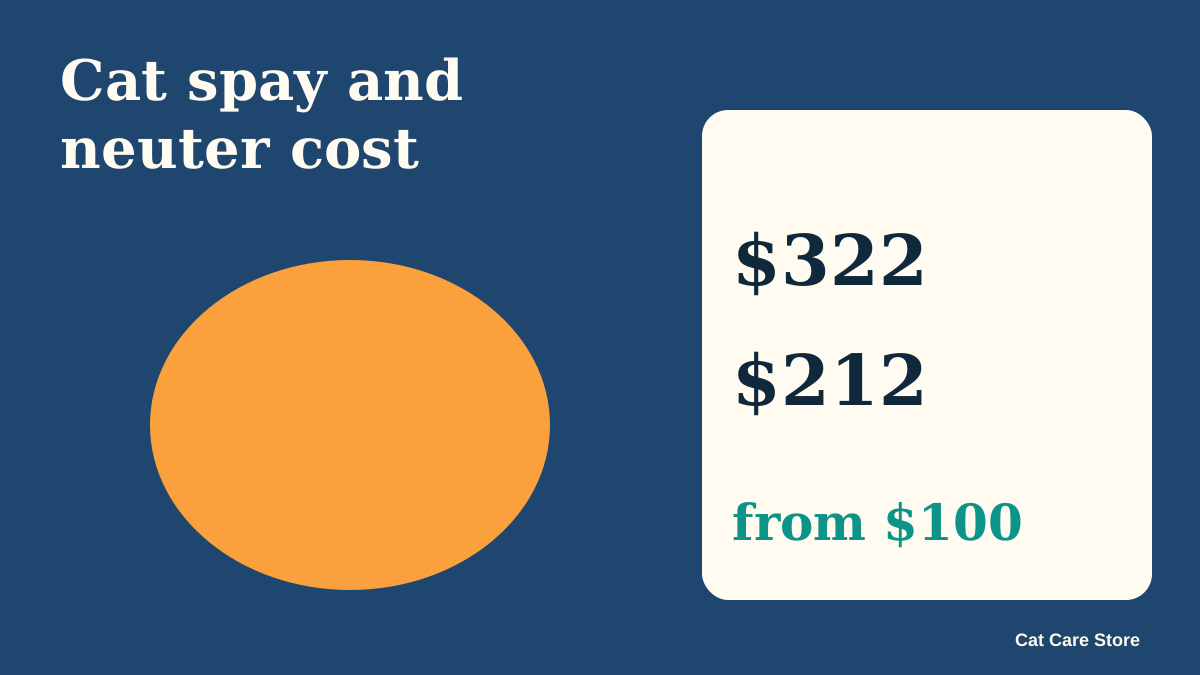
The short answer: in the US, spaying a female cat under six months old averages about $322 (typical range $255 to $587), and neutering a male cat averages about $212 (range $168 to $385), according to a 2025 cost study published by CareCredit. Low-cost clinics and shelter programs often charge far less, in some cities $100 to $140 for either surgery. This guide is general information, not veterinary advice, and a written estimate from your own clinic always beats an average.
What a cat spay or neuter costs in the US
The CareCredit figures come from a 2025 survey of veterinary practices in all 50 states and Washington, DC, run on behalf of CareCredit by a market-research firm. They are averages for cats under six months old at a regular practice, and the page notes that fees such as an in-office visit may be charged in addition. Prices swing by state, and a few examples from the same study show how much:
| State | Average spay (female) | Average neuter (male) |
|---|---|---|
| Mississippi | $259 | $170 |
| Texas | $285 | $188 |
| Illinois | $293 | $192 |
| Florida | $318 | $209 |
| New York | $384 | $252 |
| California | $429 | $283 |
| Massachusetts | $452 | $295 |
| Hawaii | $576 | $380 |
CareCredit says the clinic type (a small practice, a larger clinic or a pet hospital) and where you live affect the price you pay. Treat the table as a sanity check: if a quote is double your state's average, ask what is in it.
Why spaying costs about 50% more than neutering
The gap is the surgery. CareCredit describes a spay as removing the uterus and ovaries (or sometimes only the ovaries) through an incision in the abdomen. A neuter removes the testicles through a small incision at the scrotum, and the cut is often small enough that it needs no stitches. A spay is the larger operation, which is why the female average ($322) sits roughly 50% above the male one ($212).
What the quote should include
A low headline price is only a good deal if it covers the whole day. CareCredit lists the usual steps: a pre-surgery check-up by the vet, a blood panel if there are any health concerns that could make anesthesia riskier, intravenous fluids and pain medication during surgery, and monitoring while the cat wakes up. Ask whether these are included or charged separately:
- Pre-surgery exam and any blood work.
- Anesthesia and monitoring, including IV fluids.
- Pain relief during the surgery and to take home.
- Recovery collar or suit. Some clinics charge extra for a cone.
- Vaccines and microchip, often offered at the same visit.
- Surcharges for a cat in heat, pregnant, overweight or with a retained testicle.
The last item matters most. The Seattle Animal Shelter publishes its extra fees: $50 if a cat is in heat, $150 for a pregnant cat or one with a uterine infection (pyometra), $50 if the cat is obese, and $50 to $100 for a cryptorchid cat, meaning one with an undescended testicle. Having the surgery done before the first heat avoids the heat and pregnancy surcharges.
Low-cost and free options
Shelters, humane societies, veterinary schools and nonprofit clinics often run spay and neuter programs at a fraction of private-practice prices. Two published price lists show what to expect:
- Seattle Animal Shelter: $115 for a male cat and $140 for a female cat, all sizes. The city service is for households under an income limit (80% of area median income, for example $84,850 for a one-person household), and fees can be reduced further through its Pet Population Control Fund. Rabies and FVRCP vaccines are $15 each and a microchip is $30 at the same visit.
- Sacramento SPCA (prices effective March 1, 2026): $100 for a cat spay or neuter, with 20% off for seniors and veterans and 50% off for people enrolled in certain utility assistance programs. Cats must be between 3 months and 7 years old, there is a $5 non-refundable deposit, and appointments run through a waiting list.
These are two examples, not a national price. They show that an eligible household can pay roughly a third of the average spay price, and that the catch is usually waiting time and eligibility. Search for "low-cost spay neuter near me" with your county, ask your local shelter, and ask your regular vet whether they know of voucher programs. Some local programs also offer free surgery for community cats.
Does pet insurance cover spay and neuter?
Usually not through the main accident-and-illness policy. CareCredit says many insurers leave spay and neuter out of their primary plans, though some cover them as part of a wellness add-on, sometimes after your cat has been enrolled for a set period. Because a spay or neuter is a one-off cost in the first months of life, an insurance plan rarely changes the maths. Our guide on whether pet insurance is worth it for cats explains what wellness plans cover and what they cost.
When to do it, and why that affects the price
The Feline Veterinary Medical Association (formerly the AAFP) supports spaying and neutering cats not intended for breeding by 5 months of age, and notes that a cat can be reproductively active, without obvious signs, as early as 4 to 5 months. The ASPCA says it is generally considered safe for kittens as young as eight weeks to be spayed or neutered, and advises scheduling the surgery before five months to potentially avoid the start of urine spraying and to eliminate the chance of pregnancy. In the UK, Cats Protection recommends four months.
Timing also changes what you pay. CareCredit's averages are for cats under six months old, and shelters add surcharges for cats in heat or pregnant. The ASPCA adds that spaying before the first heat offers the best protection against uterine infections and breast tumors, which it says are malignant in about 90% of cats that develop them. A cat in heat can still be spayed, but expect the extra fee. If you have a kitten at home, our guide on caring for a one-month-old kitten covers the first weeks before surgery is on the calendar.
What to expect on the day and afterwards
Your clinic will give you its own instructions. In general, an adult cat is fasted from the night before, though the ASPCA notes that a young kitten may need food, so follow your vet's advice. CareCredit says cats are usually ready to go home within 12 to 24 hours. At home, give your cat a quiet room away from other animals, stop running and jumping for up to two weeks or as long as your vet advises, and prevent licking of the incision with a well-fitted collar or recovery suit, the ASPCA says. Call your vet if the incision opens, swells, bleeds or looks infected, or if your cat stops eating. Our article on what to do when a cat stops eating explains when that becomes urgent.
The greatest risk of any spay or neuter is the anesthesia, which is why vets check your cat first. Other complications, such as a hernia, internal bleeding or infection, are rare according to CareCredit.
How to pay less without cutting corners
- Get two or three written quotes for the same scope: exam, anesthesia, pain relief, collar and any vaccines you want. Compare totals, not headline prices. Our checklist for choosing a vet includes questions about anesthesia monitoring and pain control.
- Book before the first heat. It avoids the heat and pregnancy surcharges.
- Try a nonprofit or shelter clinic first if you qualify, but check how they handle anesthesia, pain relief and emergencies.
- Bundle vaccines and a microchip with the surgery if the clinic offers it at a lower combined price.
- Ask about payment plans or veterinary financing, and read the interest terms first.
The ASPCA points out that a spay or neuter costs far less than having and caring for a litter, so the surgery is usually the cheaper path even at full price. UK owners can look to Cats Protection, which says it supports the neutering of around 136,000 cats and kittens a year and may help with costs for people on means-tested benefits or a household income under £25,000. It also notes that microchipping has been the law in England since June 2024, and that your vet may suggest a chip at the time of neutering if your cat does not have one.
Frequently asked questions
How much does it cost to spay a cat?
CareCredit's 2025 study puts the US average at $322 for a cat under six months old, with a range of $255 to $587. Low-cost programs can be $100 to $140.
How much does it cost to neuter a male cat?
The same study puts the average at $212, with a range of $168 to $385. Neutering is cheaper than spaying because the surgery is shorter and simpler.
Is it cheaper to neuter a cat at a shelter or clinic?
Often yes. Seattle's city shelter charges $115 for males and $140 for females, and the Sacramento SPCA charges $100, but eligibility rules and waiting lists apply.
What is the best age to spay or neuter a cat?
The Feline Veterinary Medical Association supports doing it by 5 months for cats not intended for breeding. The ASPCA says kittens can be done from eight weeks. Your vet will pick the right date for your cat.
Will pet insurance pay for it?
Usually only through a wellness add-on, and some plans require a waiting period. Check the policy before you rely on it.
Sources
- CareCredit (Synchrony), Cat Spay and Neuter Cost and Procedure Guide (November 21, 2025; 2025 research by ASQ360 on behalf of CareCredit)
- Feline Veterinary Medical Association (formerly AAFP), 2020 Pediatric Sterilization in Cats
- ASPCA, Spay/Neuter Your Pet
- Seattle Animal Shelter, Spaying and Neutering Fees
- Sacramento SPCA, Spay Clinic Costs & Fee Schedule (pricing effective March 1, 2026)
- Cats Protection, Neutering and Financial assistance with the cost of neutering