Raw Cat Food and Salmonella: What the Darwin's FDA Warning Means for You
The FDA warned owners not to feed two lots of Darwin's raw chicken cat food after Salmonella was found. Check your freezer, and how to handle raw food safely.
On this page
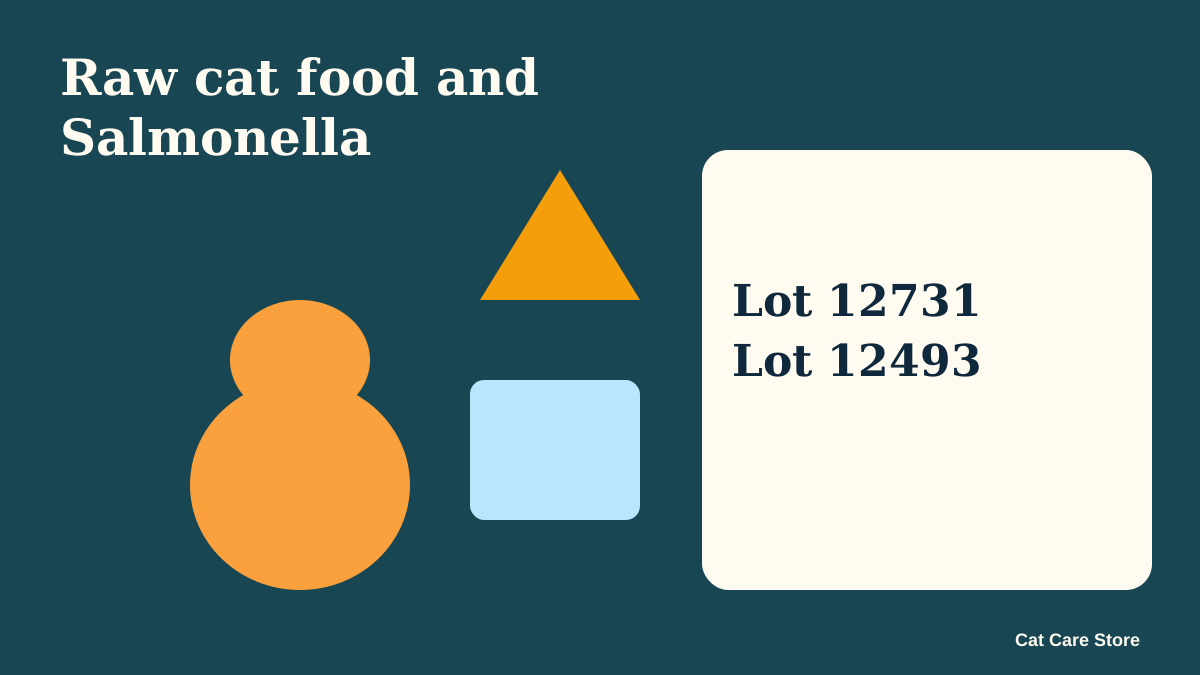
The short answer: if you feed Darwin's Natural Pet Products "Natural Selections Chicken Recipe for Cats", check your freezer today. On October 27, 2026 the US Food and Drug Administration (FDA) warned owners not to feed two lots, 12731 and 12493, because they tested positive for Salmonella. If you feed any raw food, assume it can carry bacteria that make people sick, and handle it the way you would handle raw chicken. This guide is general information, not veterinary advice.
What the FDA warning says
According to Food Safety News' October 28 report on the FDA notice:
- Product: Darwin's Natural Pet Products Natural Selections Chicken Recipe for Cats.
- Lot 12731, manufactured July 8, 2026, and lot 12493, manufactured April 2, 2026. The labels carry no expiration date, so the food could still be in your freezer.
- How it was found: a consumer complained to the FDA after two cats became ill and one needed hospital treatment. Both cats recovered after the food was stopped.
- Recall status: the FDA recommended a recall of the two lots. At the time of that report, the company had not started one.
- How it is sold: frozen, online, by subscription, in 2-pound packages split into four units.
The same report says it counts six instances of contamination in this company's products since 2023, and that in August the US Department of Justice filed a complaint seeking to stop the company making raw pet food. It describes a case in which a 4-year-old boy developed kidney failure and lab testing of the family's unopened pet food matched his Salmonella and STEC samples. These are allegations in a court filing, not court findings.
What to do if you have this food
- Check the lot number on every pack. Do not rely on the "freshness" of the freezer: freezing does not kill Salmonella.
- Throw affected food away in a secure container that your cat, other pets and wildlife cannot reach, as the FDA advises.
- Clean and disinfect anything that touched it: bowls, scoops, the freezer shelf, counters and the sink (steps below).
- Wash your hands thoroughly with soap and water after you handle the food, the bowls or the freezer shelf.
- Call your vet if your cat has vomiting, diarrhea, fever, loss of appetite or unusual tiredness, and tell them the cat has been eating raw food.
- See a doctor if a person in the home has diarrhea, fever or stomach pain after handling the food or the cat, and mention the pet food.
If you have a different brand or a different lot, the warning does not apply to it, but the handling advice below still does. Our guide to choosing a vet covers how to raise diet questions at a check-up.
Why raw cat food carries a higher risk
The FDA's own testing study is an older one, so treat the numbers as a snapshot, not today's rate. In a study run from October 2010 to July 2012, FDA scientists tested pet foods for bacteria. Of 196 commercial raw dog and cat food samples, 15 tested positive for Salmonella and 32 for Listeria monocytogenes. By comparison, 1 of 120 dry cat food samples tested positive for Salmonella and none of the 120 semi-moist cat food samples did. Canned food was not tested. Raw food was the only group with Listeria found at all.
The FDA's general conclusion is that raw pet food is more likely than processed pet food to test positive for Salmonella. That does not make cooked or dry food risk-free: the FDA also notes that both raw and cooked pet foods are recalled for Salmonella and Listeria.
There are two things worth knowing about the bacteria themselves, both from the FDA:
- Freezing and drying do not kill Salmonella. It can survive for several weeks in dry conditions and several months in wet ones.
- Cats are often carriers. Salmonella illness is uncommon in cats, but a healthy-looking cat can still shed the bacteria in its stool and saliva, which can reach people, other pets and surfaces. That is one reason to keep the litter box area clean (see our litter box mistakes guide).
Signs of Salmonella in cats and in people
In cats the FDA lists vomiting, diarrhea (which may be bloody), fever, loss of appetite and lower activity. Kittens are more likely to show signs than adult cats, and adult cats that do get sick often have another health problem at the same time. Because these signs are shared by many conditions, they are a reason to call your vet, not a way to diagnose the cause yourself. Our guide to subtle signs your cat is unwell helps with spotting changes early.
In people Salmonella usually causes fever, diarrhea, nausea, vomiting and stomach pain, starting from 6 hours to 6 days after exposure. Most people recover within 4 to 7 days without treatment, but the FDA says children under 5, pregnant women, older adults and people with weakened immune systems are more likely to have severe illness. The World Health Organization adds that dehydration can become severe and life-threatening, particularly in children and older people. If anyone at home is in a higher-risk group, think hard before keeping raw pet food in the house at all.
How to handle raw cat food more safely
If you decide to keep feeding raw food, follow the FDA's handling steps every time:
- Wash your hands for at least 20 seconds with soap and water after handling the food, and after touching bowls, utensils or surfaces it has been near.
- Clean first, then disinfect. Wash with hot, soapy water, then use a disinfectant. The FDA gives a bleach solution of 1 tablespoon bleach in 1 quart (4 cups) of water, or ¼ cup in 1 gallon, as an effective option. Keep your cat out of the area until surfaces are dry and rinsed as the product label directs. The dishwasher also works for bowls and utensils.
- Keep it frozen until use and thaw it in the refrigerator, not on the counter or in the sink.
- Do not rinse raw meat, because the juices can splash bacteria onto other food and surfaces.
- Keep raw food separate from your own food, and cover and refrigerate leftovers right away, or throw them out safely.
- Do not kiss your cat around the mouth or let it lick your face after a raw meal, and wash your hands after being licked.
The FDA also says that if you make your own cooked cat food from raw ingredients, cook everything to a safe internal temperature measured with a food thermometer. Homemade diets for cats are hard to balance, so ask your vet for a recipe rather than improvising.
If you want to stop feeding raw
Switching is not an emergency, but do it gradually and with your vet's input, especially for a kitten, a senior cat or a cat with a health condition such as kidney disease. Cats can be fussy and a sudden change can upset the stomach or lead to refusing food. Our guides to food for a sensitive stomach and choosing a budget wet food cover how to pick a complete cooked or canned diet without overspending.
Frequently asked questions
Does the warning apply to other Darwin's products or other raw brands?
The FDA warning names two lots of one product. It does not say other products are contaminated, but the same report notes earlier findings from the same company and the FDA's general warning that raw pet food is more likely to carry bacteria. Check the FDA's pet food recalls page for the latest updates.
My cat ate the food and seems fine. Should I worry?
A cat can carry Salmonella without showing signs and still shed it. Stop feeding the lots, clean up, wash your hands and watch for vomiting, diarrhea, fever or reduced appetite. If you see any of them, or if you are unsure, call your vet.
Does freezing make raw food safe?
No. The FDA says freezing and drying typically stop bacteria growing but do not kill Salmonella.
Is cooked or canned cat food completely safe?
No food is risk-free, and cooked pet foods are also recalled at times. In the FDA's older study, though, processed foods tested positive far less often than raw food. Check recall notices and store food as the label says.
Can I catch Salmonella from my cat?
Yes, it is possible, from handling food, litter or a cat that is shedding the bacteria. Hand washing, cleaning litter boxes regularly and not letting a cat lick your face are the main protections.
Sources
- Food Safety News, FDA issues another warning against Darwin's pet food; firm refuses to initiate recall (October 28, 2026)
- US Food and Drug Administration, Get the Facts! Raw Pet Food Diets can be Dangerous to You and Your Pet
- US Food and Drug Administration, Get the Facts about Salmonella
- World Health Organization, Salmonella (non-typhoidal) fact sheet