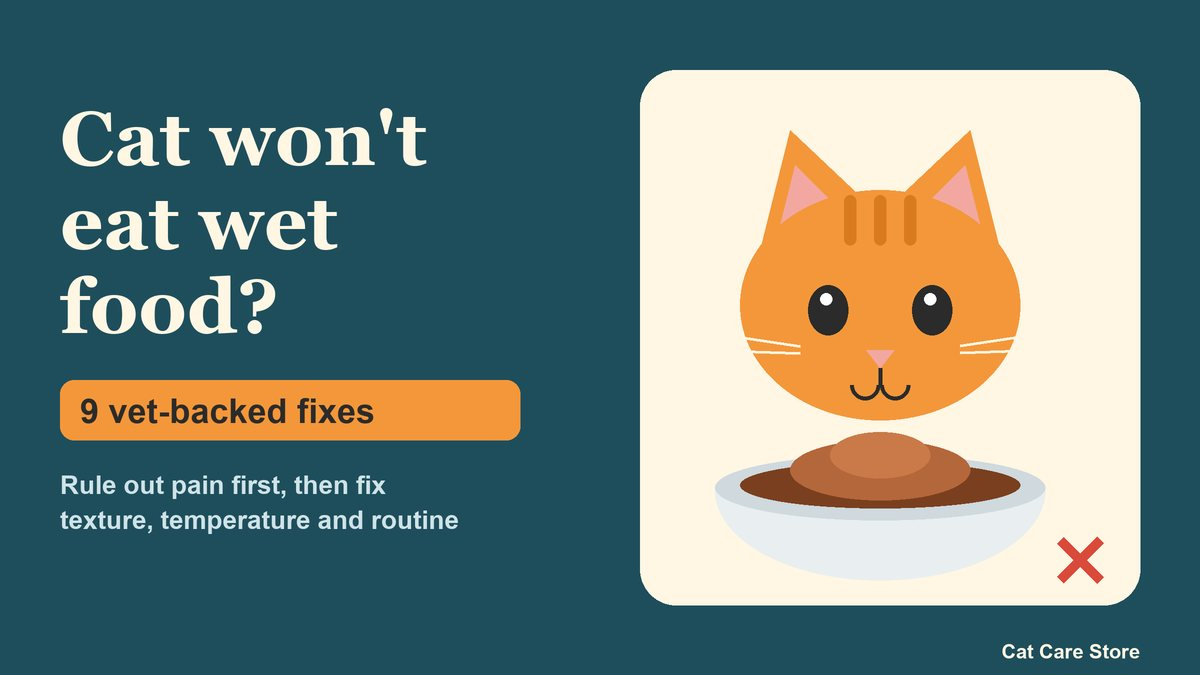
Cat Won't Eat Wet Food? 9 Vet-Backed Fixes and When to Call the Vet
Cat refusing wet food? Rule out dental pain and illness first, then try nine vet-sourced fixes and a gradual switch plan. Know when to call the vet.
On this page
The short answer: most healthy cats that turn their nose up at wet food are reacting to texture, temperature, smell, a stale bowl or a change that was too fast, and those are fixable in a week or two. But a cat that suddenly stops eating anything, or eats dry food yet refuses wet because chewing hurts, may be ill. VCA Animal Hospitals says a cat that has refused food for more than two days needs a vet right away, and the risk comes sooner in overweight cats. This guide separates picky from sick, gives nine practical fixes drawn from veterinary sources, and shows a step-by-step way to move a dry-fed cat onto wet food. It is general information, not veterinary advice.
First: is it pickiness, or is something wrong?
Veterinary nutrition guidance from VCA (written with the Canadian Academy of Veterinary Nutrition) is blunt: before you label a cat "picky", rule out a medical cause. The conditions it lists include dental disease, kidney disease, a foreign body or other stomach upset, arthritis and hepatic lipidosis (fatty liver disease). VCA also points out that dental disease can sit below the gumline where you cannot see it, so teeth that look fine do not clear a cat.
VCA's separate article on feline anorexia draws a useful line between two situations:
- Pseudo-anorexia: the cat wants to eat but cannot, because of mouth, throat or jaw pain, loose teeth, or trouble chewing and swallowing. Possible clues, though not a diagnosis, are interest in food followed by walking away, dropping food or chewing on one side.
- True anorexia: the cat is not interested in food. Causes range from stress, a changed routine or an unappealing food to nausea, infection, organ disease, pain, medication side effects and a blocked sense of smell. Scent is a major driver of appetite for cats.
Treat it as a vet visit, not a food experiment, if any of these apply:
- Your cat has eaten little or nothing for 24 to 48 hours, or more than two days in any case.
- Your cat is overweight. VCA warns that sudden loss of appetite in overweight cats is especially dangerous because the liver can fail when the body burns fat too fast.
- There is vomiting, diarrhea, lethargy, hiding, drooling, bad breath, weight loss or increased thirst alongside the food refusal.
- The cat is a kitten, a senior, diabetic or has known kidney disease.
If the signs fit, start with our guide on what to do when a cat stops eating. Dental pain is a common culprit; see what a cat dental cleaning costs in the US and kidney disease symptoms in cats. If a vet visit is on the cards, here is what an exam typically costs.
Why a healthy cat might still refuse wet food
Once a vet has cleared your cat, the usual reasons are mundane. Cats are very particular about what they eat, Cats Protection says, and the choice between wet and dry is down to the individual cat. Wet food is not required: as long as a food is labelled complete and balanced, it covers a cat's nutrition. The case for wet food is mostly about water and appetite. Cornell's Feline Health Center notes that canned food contains at least 75 percent moisture, which makes it a good source of water, and that it is highly palatable for most cats. Cats Protection adds that it can suit cats with urinary problems or dental pain, and PDSA says a wet diet can raise water intake in cats that are not keen on drinking.
Typical reasons a cat rejects it anyway:
- Texture. Pâté, chunks in gravy, shreds and mousse are different foods to a cat. PDSA says texture is very important to cats.
- Temperature. Straight from the fridge is a common problem. Cats Protection recommends room temperature.
- Stale food or a smelly bowl. Cats are very sensitive to smells, and a bowl that has sat out or never gets properly washed can put a cat off.
- Too many options. VCA notes that endless variety can teach some cats to hold out for their favorites.
- Not hungry. Picky cats are often slightly overweight and may simply be getting enough calories from dry food, treats and toppers.
- Stress or competition. A bowl near a door, a litter box or another cat is a poor dining spot.
9 fixes to try, in order
- Serve it at room temperature or gently warmed. Cats Protection says warming increases the scent but to be careful not to make it too hot. VCA suggests roughly body temperature, about 100°F (38°C), and stirring well if you use a microwave so there are no hot pockets. Test it on your wrist first.
- Serve small portions, fresh and often. Cats Protection suggests small, regular amounts so the food stays fresh and is less overwhelming. Wet food should be replaced at least twice a day. Refrigerate opened cans, as Cornell advises, and bring a portion back to room temperature before serving.
- Wash the bowl daily. Warm water, normal washing-up liquid, a thorough rinse. Cats Protection and PDSA both prefer ceramic over plastic, because plastic can hold odors over time.
- Choose a shallow dish and a calm spot. PDSA recommends shallow bowls so cats can see around them and so whiskers do not brush the sides. Keep food well away from the litter box, doors and sleeping areas, and feed other cats separately.
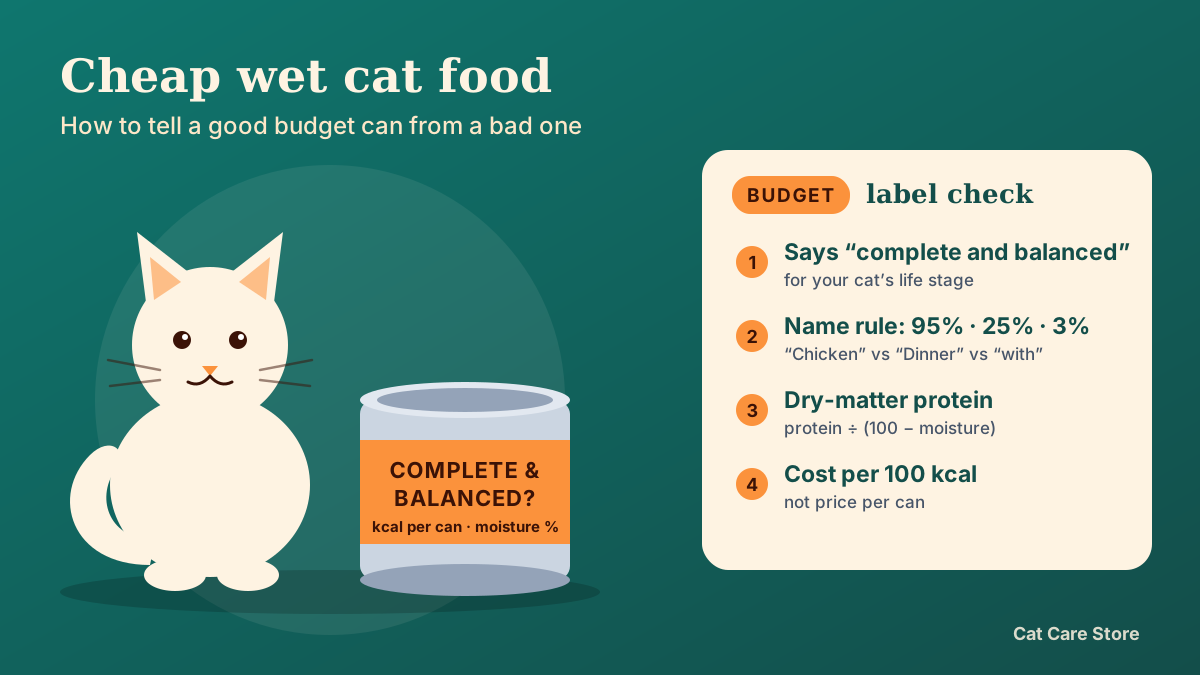
- Change the texture, not just the flavor. If pâté fails, try shreds, flakes in gravy or a minced style. When you find one your cat accepts, VCA advises sticking with that formulation for consistency rather than rotating constantly. For help choosing a budget option, read how to tell a good cheap wet food from a bad one.
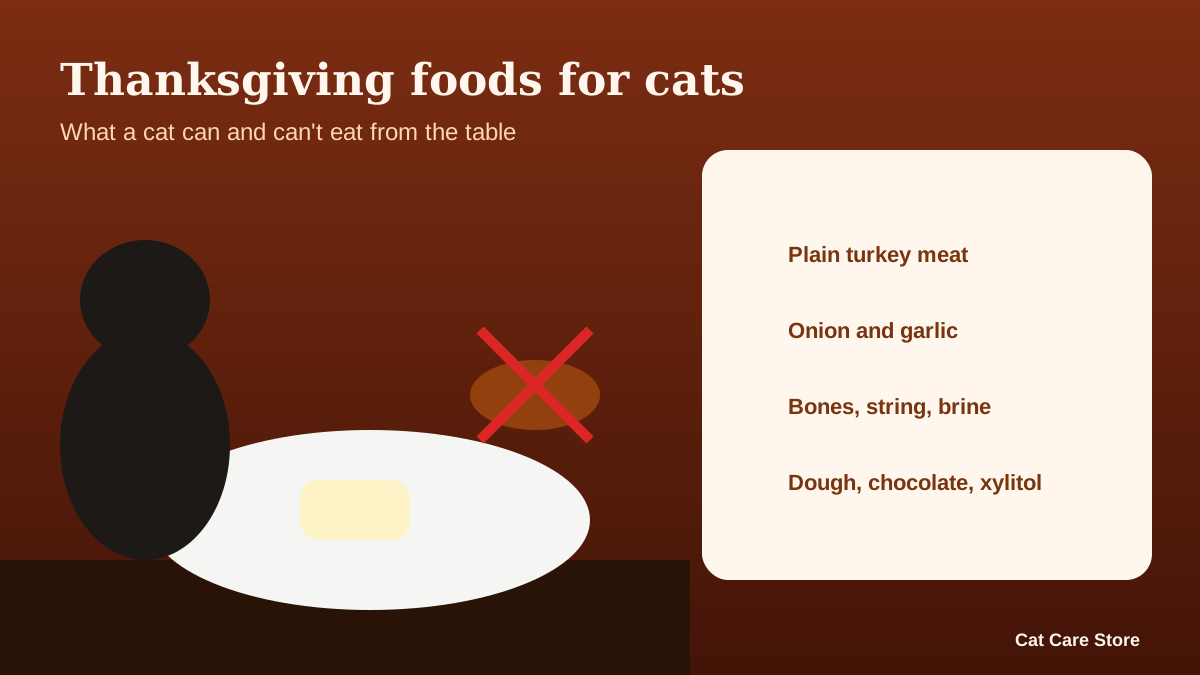
- Use a topper, sparingly. A spoonful of gravy from a preferred canned food on top of dry kibble is an option VCA mentions, as are small toppers or enticements. Cats Protection suggests a drop of fish oil, yeast extract spread or kitten food occasionally. Keep toppers and treats to no more than about 10 percent of daily calories, as VCA recommends. Not sure what is safe? See which human foods cats can and cannot eat.
- Add a little low-sodium broth. VCA lists low-sodium chicken, vegetable or beef broth as a flavor booster for cats with a reduced appetite. Check there is no onion or garlic in it, which are toxic to cats.
- Set meal times. VCA suggests offering food at specific times and leaving it out for short periods rather than free-feeding. A healthy cat that skips an occasional meal is fine if weight, stools and energy are normal.
- Sit with your cat. Cats Protection says sitting down with a cat, or offering a morsel by hand, can stimulate appetite. Never force-feed: VCA warns it can cause aspiration pneumonia and increase food aversion.
How to move a dry-fed cat onto wet food
Sudden swaps often fail and can upset the stomach. Both UK charities recommend going slowly, but they disagree on one detail, and your cat may decide which is right.
- Cats Protection method (mixing): add a little of the new food to the usual food, gradually offer more and less of the old, and continue for a week or more until the new food is the only one. If your cat refuses it or becomes unwell, go back to the old food and ask your vet.
- PDSA method (separate plates): on days 1 to 4, give the regular meal and put a teaspoon of the new food on a separate plate. Do not mix the foods, because texture matters and mixing may put the cat off both. Only move on after at least three days of happily eating it. Over days 5 to 10, increase the new food and reduce the old. From days 10 to 14, phase the old food out. It can take longer than ten days, and if your cat refuses, that usually means the process was too fast: start again, then try another flavor, texture or brand.
A practical hybrid for a cat that loves its kibble: keep the kibble, and offer a teaspoon of wet food on a saucer next to it at a calm time of day, away from the main dish. If that works for a few days, add a second spoonful. Reduce the dry portion by about the calories of wet food your cat eats so you do not overfeed. Your vet can work out your cat's daily calorie need.
What not to do
- Don't starve a cat into eating. This is dangerous for cats, especially overweight ones, because of the fatty liver risk VCA describes.
- Don't keep switching brands every day. Variety can train a cat to wait for something better.
- Don't serve raw or homemade meals to tempt appetite without a vet. Cornell does not recommend raw diets, citing bacteria and parasites with no proven benefit, and VCA says most online homemade recipes are deficient in at least one essential nutrient. See our post on the Darwin's raw food warning.
- Don't give human food as a meal replacement. VCA says it is impossible to meet a cat's nutrient needs with human foods alone.
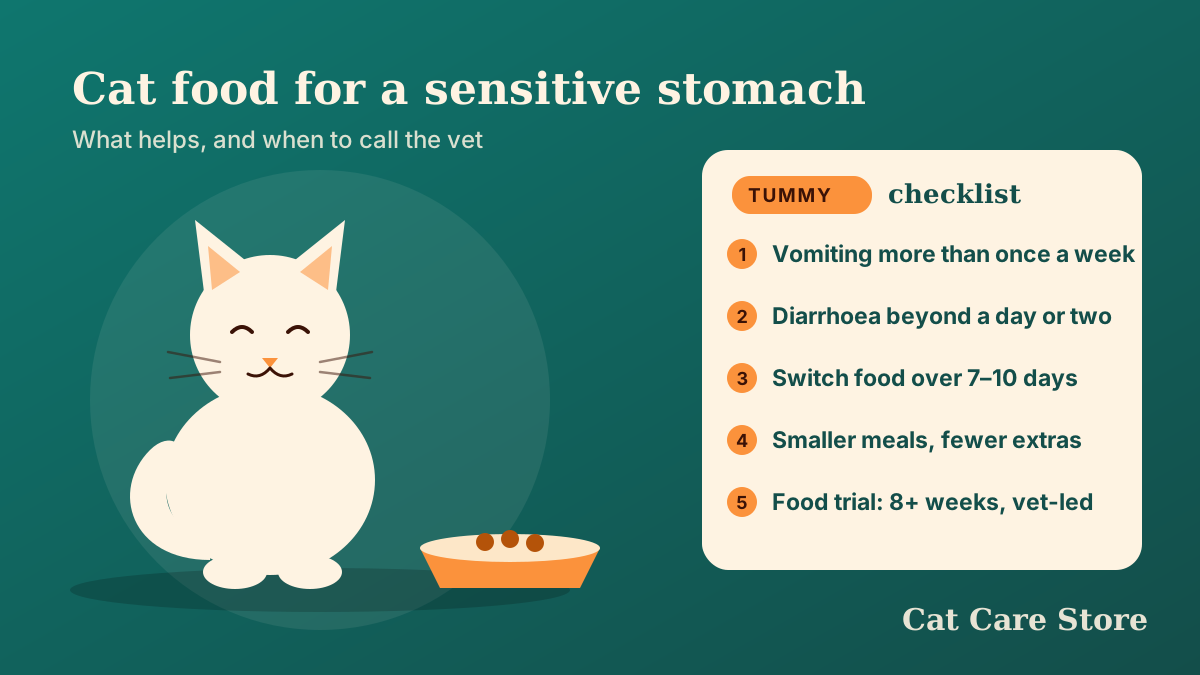
- Don't ignore a new sensitive stomach. If wet food is followed by vomiting or loose stools, read cat food for a sensitive stomach and talk to your vet.
When to call the vet
Call the same day if your cat will not eat at all for 24 hours, and straight away if the cat is overweight, very young, old or has a condition such as kidney disease or diabetes. Call immediately if you see repeated vomiting, trouble breathing, a swollen belly, straining in the litter box or no urine; the last two can be emergencies, covered in our guide to cat UTI symptoms. Vets may recommend an appetite stimulant, anti-nausea medicine, fluids or a short feeding plan; VCA notes that medicines such as mirtazapine or capromorelin may be prescribed, but only your vet can decide.
Frequently asked questions
Why won't my cat eat wet food but will eat dry?
Often it is texture, temperature or smell, or the cat is full on kibble. But if the cat chews on one side, drops food or avoids hard food too, mouth pain is possible, so book a dental exam.
How long can a cat go without eating?
Not long. VCA says refusal for more than two days means a vet visit right away, and overweight cats face a faster risk of liver failure. Do not wait it out.
Is it OK to feed my cat only dry food?
Cats Protection says a complete dry food covers nutrition, and the choice is down to your cat. Wet food mainly adds moisture and palatability, which can help cats with urinary or dental problems.
Can I microwave cat food?
VCA suggests warming to about body temperature (100°F or 38°C) and stirring to remove hot spots. Cats Protection warns not to make it too hot. Never serve it steaming.
How do I get a picky cat to eat wet food?
Rule out illness, then try fresh room-temperature or lightly warmed food in small amounts, a clean shallow ceramic dish, a calm spot and a gradual switch over one to two weeks or more.
Should I mix wet and dry food together?
Cats Protection says to mix during a switch, while PDSA says to keep them separate because texture matters to cats. Try one approach for a week and switch if your cat refuses it.
Sources
- VCA Animal Hospitals, My Cat Won't Eat: Feeding Picky Eaters (Canadian Academy of Veterinary Nutrition and VCA veterinarians)
- VCA Animal Hospitals, Anorexia in Cats
- Cornell University College of Veterinary Medicine, Cornell Feline Health Center, Feeding Your Cat
- Cats Protection (UK), Feeding your cat
- PDSA (UK), The best diet for your cat