Thanksgiving Foods Cats Can and Can't Eat
Plain boneless turkey is the only safe taste. Onion, garlic, bones, brine, raw dough, chocolate and fatty scraps are not. A vet-sourced guide for cats.
On this page
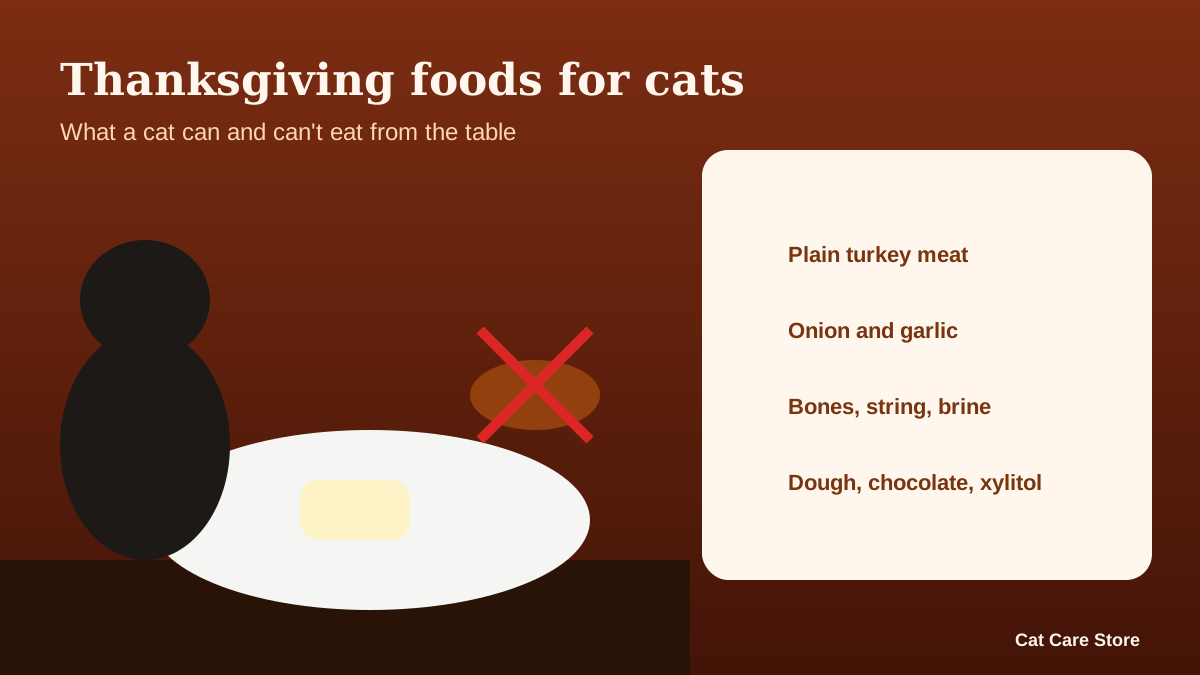
The short answer: a cat can safely have a small taste of plain, fully cooked, boneless turkey meat with no skin, gravy or seasoning. Almost everything else on a Thanksgiving table is either pointless for a cat or a real risk. The dangerous items are onions, garlic, leeks and chives (in stuffing, gravy and green bean casserole), cooked bones and the string used to truss the bird, turkey brine, raw yeast dough, chocolate, alcohol and anything sweetened with xylitol. Fatty skin, butter and drippings are the most common cause of an upset stomach the day after.
This is general information, not veterinary advice. If your cat has eaten something on the "no" list, call your vet or an animal poison helpline straight away. Don't wait for signs, because some of these foods cause damage days later.
Why cats need a different list from dogs
Most Thanksgiving pet safety advice is written with dogs in mind, because dogs are the ones that steal a whole drumstick off the counter. Cats get into trouble in different ways: they lick plates and roasting pans, chew on string, sample gravy, and pick at leftovers that sit out for hours.
Cats are also more sensitive to one of the most common holiday ingredients. The ASPCA notes that onion, garlic and chives (the Allium family) can damage red blood cells and cause anemia, and that cats are more susceptible than dogs. That single fact rules out a surprising share of the table.
Safe in small amounts
Plain turkey meat
The ASPCA says that if you do decide to share, a small bite of turkey should be boneless and fully cooked. Raw or undercooked poultry can carry salmonella. For a cat, "a small bite" means roughly the size of your thumbnail, taken from the breast, with the skin removed and no gravy, butter, salt or herb rub on it.
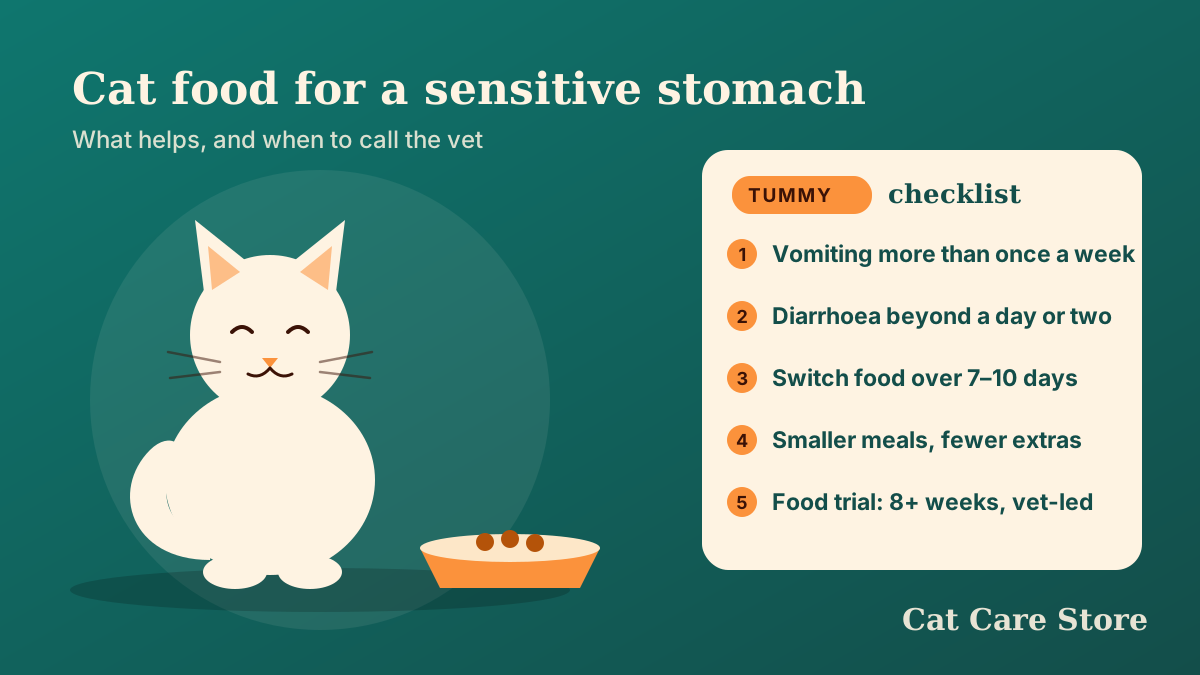
Cats are obligate carnivores, so plain meat is the one part of the meal that suits them. That doesn't make it a good idea to give a lot. A cat's daily food needs are small, and a few rich extras on top of a normal dinner can be enough to cause vomiting or diarrhea. If your cat has a sensitive stomach, a kidney or urinary diet, or diabetes, skip the turkey entirely and give one of their usual treats instead. Our guide to cat food for a sensitive stomach explains why rich, fatty food is a common trigger.
Their own treats
The AVMA's holiday advice is simple: keep people food away from pets, and if you want to include them, use treats made for pets. A few of your cat's normal treats in a puzzle feeder, or a short play session before guests arrive, does more for a cat than any leftover.
Foods to keep away from cats
Onions, garlic, leeks, chives and shallots
These turn up in stuffing, gravy, green bean casserole, mashed potatoes and many sauces. The Merck Veterinary Manual notes that dogs and cats have been poisoned by raw, cooked, dehydrated and granulated onion and garlic, so onion powder in a gravy mix counts. Signs of anemia (weakness, pale gums, yellowing, collapse) usually appear several days after the meal, which is why a cat that seems fine on Thursday night can still need a vet on Sunday.
Cooked bones, trussing string and the roasting pan
Pet Poison Helpline lists discarded bones, corn cobs and turkey trussing as obstruction and gut-injury risks that can need surgery. For cats, string is the bigger worry. Cooking twine that smells of turkey is very tempting, and swallowed string can catch in the intestine and cause a serious "linear" blockage. Cut the string off over the trash can, not the counter, and take the carcass straight outside or into a lidded bin.
Turkey brine
This one is easy to miss. Pet Poison Helpline warns that the salty liquid left after brining a turkey is attractive to dogs and cats, and that lapping it up can cause salt poisoning: heavy thirst and urination, vomiting, diarrhea and, in serious cases, dangerous electrolyte changes and brain swelling. Pour brine away as soon as the bird comes out, and don't leave a brining bag or bucket on the floor.
The same goes for very salty extras. The ASPCA points out that bouillon cubes used for stock and gravy contain high amounts of sodium that can cause stomach problems and even seizures.
Fatty skin, drippings, butter and gravy
Fatty foods such as butter, bacon, drippings, gravy and meat scraps are among the common Thanksgiving-week calls to Pet Poison Helpline. In dogs they are a classic trigger for pancreatitis. In cats the link with a single fatty meal is less clear-cut, but rich food still commonly brings on vomiting and diarrhea. Keep gravy boats and roasting pans out of reach until they're washed.
Raw yeast dough
Raw bread or roll dough can keep rising in the stomach and cause painful bloating, and the yeast produces alcohol as it ferments, according to the ASPCA. If you're proofing rolls, do it in a closed oven or a room the cat can't get into.
Chocolate, xylitol and other desserts
The AVMA treats all chocolate as off limits for dogs and cats. Pecan pie and nut-heavy desserts are rich in fat. Sugar-free desserts may contain xylitol. Its effects (a dangerous drop in blood sugar and liver damage) are best documented in dogs, and the ASPCA lists it among foods to keep from all pets. Whipped cream and eggnog are dairy, which many adult cats digest poorly, and eggnog may also contain alcohol and raw egg.
Grapes and raisins
Raisins hide in stuffing, salads and baked goods. The kidney damage they cause is well documented in dogs. Evidence in cats is much more limited, but the ASPCA includes grapes and raisins on its list of foods to keep away from pets, so there's no reason to take the chance.
Alcohol
Cats are small, so even a few licks from an unattended glass of wine, beer or a creamy cocktail can matter. Collect glasses as guests finish with them.
Quick reference: Thanksgiving dishes for cats
- Plain white turkey meat, no skin, no bones: OK as a thumbnail-sized taste.
- Turkey skin, drippings, gravy: No. Fat and salt, and gravy often contains onion or garlic.
- Stuffing or dressing: No. Onion, garlic, herbs, sometimes raisins.
- Green bean casserole: No. Fried onions and creamy sauce.
- Mashed potatoes: No. Butter, cream, often garlic.
- Cranberry sauce: Not on the toxic lists, but sugary and of no use to a cat. Skip it.
- Pumpkin or pecan pie, whipped cream: No. Sugar, fat, spices, dairy, possibly xylitol.
- Rolls and raw dough: Raw dough is dangerous. Baked bread has no value for a cat.
- Brine, bones, string, foil: Keep completely out of reach.
Set the house up before guests arrive
- Give your cat a quiet room with litter, water, a bed and a hiding spot, with the door closed while people come and go. The same set-up that helps at Halloween works here.
- Tell guests the rule: no feeding the cat from the table, however much it asks. One house rule is easier than policing every plate.
- Clear as you go: plates, glasses and the roasting pan off low tables and counters. The ASPCA also suggests emptying the trash during the day, because a full can is a buffet of bones and onions.
- Check the centerpiece. Bouquets often include lilies. The FDA warns that true lilies and daylilies can cause kidney failure in cats, even from pollen or vase water. Choose a lily-free arrangement.
- Keep the normal routine: meals and litter cleaning at the usual times. Busy days are when a change in appetite is easy to miss. If your cat stops eating afterwards, our article on what to do when a cat stops eating explains when that becomes urgent.
If your cat eats something it shouldn't
- Move the cat away from the food and keep the packaging, or take a photo of the dish, so you know the ingredients.
- Don't try to make your cat vomit with home remedies such as salt or hydrogen peroxide. They can cause more harm.
- Call for advice now: your vet or nearest emergency clinic, or in the US the ASPCA Animal Poison Control Center at (888) 426-4435 or Pet Poison Helpline at (855) 764-7661 (a consultation fee may apply). In the UK, Canada or Australia, call your vet or the local out-of-hours service.
- Watch for delayed signs: vomiting, diarrhea, drooling, not eating, hiding, weakness, pale or yellow gums, or straining in the litter box. Cats are good at hiding when they feel unwell, so check on them over the next few days.
It also helps to know where your nearest 24/7 clinic is before the holiday. The AVMA recommends keeping your vet's number, the emergency clinic and the poison lines somewhere easy to find. If you're still looking for a regular clinic, see our questions to ask when choosing a vet.
Frequently asked questions
Can cats eat turkey on Thanksgiving?
Yes, a small taste of plain, fully cooked, boneless turkey meat without skin, gravy or seasoning is fine for most healthy cats. Skip it for cats on a prescription diet or with a sensitive stomach.
Can cats eat stuffing?
No. Stuffing usually contains onion, garlic or other Allium ingredients, which can damage a cat's red blood cells, and it may also contain raisins and a lot of fat and salt.
Is turkey gravy safe for cats?
No. Gravy is fatty and salty, and many gravies and gravy mixes contain onion or garlic powder. Cats are more sensitive to these than dogs.
My cat licked some gravy. What should I do?
Check the ingredients for onion, garlic, chives or bouillon, then call your vet or a poison helpline for advice based on the amount and your cat's size. Watch for vomiting, weakness or pale gums over the next few days.
Sources
- ASPCA, Thanksgiving Safety Tips
- ASPCA Animal Poison Control, People Foods to Avoid Feeding Your Pets
- American Veterinary Medical Association (AVMA), Winter holiday pet safety
- Pet Poison Helpline, Thanksgiving Pet Safety Tips
- Merck Veterinary Manual, Garlic and Onion (Allium spp) Toxicosis in Animals
- U.S. Food and Drug Administration, Lovely Lilies and Curious Cats: A Dangerous Combination
- Cornell Feline Health Center, Feeding Your Cat